Preview An event security risk assessment can sound far more complicated than it actually is…
Event Security Planning: What Happens Before the Doors Open?
Successful event security begins long before visitors arrive. From checking access points and briefing security staff to coordinating deliveries and preparing for busy entrances, the work carried out beforehand can make a significant difference to how smoothly an event runs. We explore what happens behind the scenes and how organisers can prepare their security teams for the day ahead.
Why Event Security Planning Starts Before Visitors Arrive
When you attend a well-organised event, you probably give very little thought to the security arrangements. Visitors enter without confusion, suppliers know where to go, queues move steadily and staff appear to be in the right place whenever assistance is needed. It all looks straightforward, but much of that organisation comes from the preparation carried out before the doors open.
For event organisers, hiring professional security staff is only one part of the process. Those staff need to understand the venue, the audience, their individual responsibilities and how the event is expected to operate. Without that information, even experienced security officers can find themselves reacting to situations that could have been anticipated.
Good event security planning is therefore about turning the organiser’s arrangements into practical instructions that the security team can follow throughout the day.
What Information Does an Event Security Company Need?
The earlier you involve your security provider in the planning process, the easier it becomes to identify what support your event requires.
An exhibition attracting several thousand visitors will have different operational needs from a private corporate function or an outdoor festival. The number of guests matters, but so do arrival patterns, opening hours, venue layout, alcohol service and the activities taking place.
For example, an event expecting 2,000 visitors throughout an eight-hour period may require a different staffing arrangement from one where all 2,000 guests arrive within 30 minutes.
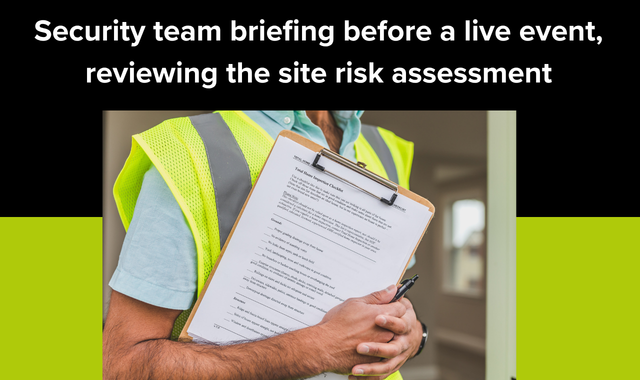
Your security provider should understand the expected attendance, entry and exit arrangements, event schedule and any particular concerns identified during planning. Sharing a site plan and relevant risk assessments also helps the team understand where attention may be required.
This information allows staffing positions and responsibilities to be considered before anyone arrives on site.
Checking the Venue Before the Event Opens
One of the most useful parts of event security preparation is checking that the physical arrangements match the event plan.
A venue layout might look perfectly sensible on paper, but once barriers, catering facilities, exhibition stands and temporary structures are installed, the available space can look very different.
Before opening, security staff may need to familiarise themselves with entrances, emergency exits, restricted areas, assembly points and access routes. They should understand where first aid facilities are located and how to contact the appropriate person if a problem develops.
At outdoor events, particular attention may be needed around temporary fencing, vehicle gates and pedestrian routes. For exhibitions and conferences, loading areas, backstage spaces and restricted access points may require additional checks.
The purpose is not to repeat the organiser’s entire risk assessment, but to confirm that the security arrangements are workable in the venue as it stands.
Briefing Security Staff Before Their Shift
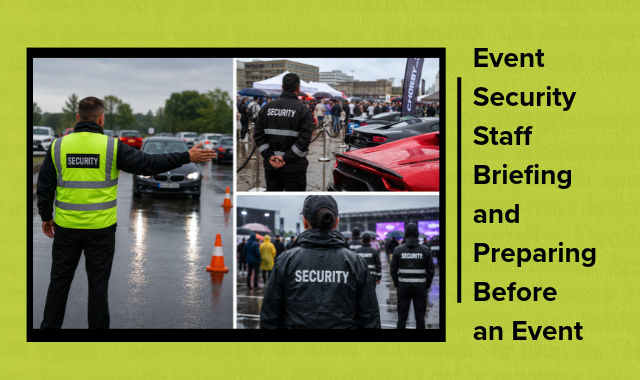
A proper security briefing gives everyone a shared understanding of how the event should operate.
Staff should know where they are positioned, what their responsibilities include and who they report to. They also need to understand the expected visitor numbers, event timings, communication procedures and what to do if an incident occurs.
Consider a security officer positioned at the entrance to a large corporate event. They may be responsible for checking accreditation, but they also need to know where to direct guests who have forgotten their passes, which entrance suppliers should use and who can authorise access when somebody is not on the attendance list.
Without that information, relatively simple situations can cause unnecessary delays.
Briefings are particularly important when security staff are working alongside stewards, event hosts, marshals and venue employees. Clear responsibilities help prevent confusion and ensure that important tasks are not overlooked.
Managing Suppliers and Deliveries Before Opening
The hours before an event opens can be among the busiest periods of the entire day.
Caterers are delivering supplies, exhibitors are preparing stands, production teams are moving equipment and contractors may still be completing their work. At larger venues, several activities can be happening simultaneously.
Security staff can support these arrangements by monitoring access points, checking credentials and helping ensure that vehicles and people use the appropriate routes.
However, they need accurate information about delivery times, authorised contractors and restricted areas. If a supplier arrives unexpectedly, there should be an agreed procedure for checking their access rather than leaving individual security officers to make assumptions.
This preparation becomes particularly valuable when the site changes from contractor access to public admission, as vehicle movements and pedestrian routes may need to be managed differently.
Preparing Entrances for the First Visitors
The entrance is often where visitors form their first impression of an event, making it an important part of security planning.
Before opening, organisers should consider where queues will form, how tickets or accreditation will be checked and whether accessible entrances are clearly identified. Security staff should understand how to respond if visitors arrive early or if a particular entrance becomes busier than expected.
At family attractions, sporting events and exhibitions, people may arrive in concentrated periods rather than at a steady rate. Planning how to manage those arrivals can reduce congestion and help visitors feel confident about where they need to go.
Security officers should also know how to communicate with the event management team if adjustments are needed once guests begin arriving.
Communication Between Security and Event Management
Even the most detailed event plan cannot predict every situation, which makes communication essential.
Security staff need a reliable way to report concerns, request assistance and receive updates when arrangements change. This may involve radios, designated supervisors or agreed communication channels with the event control team.
For example, if an entrance becomes congested, the security team should know who can authorise changes to the admission arrangements. If adverse weather affects an outdoor event, staff need clear instructions about visitor movement and any areas that must be temporarily closed.
A good communication structure means decisions can be made promptly by the appropriate people rather than relying on individual staff members to interpret changing circumstances.
The Final Checks Before Doors Open
As opening time approaches, the event management and security teams should confirm that the agreed arrangements are ready.
This includes ensuring that staff are in position, communication equipment is working, access arrangements are understood and any outstanding safety concerns have been reported and addressed.
It is also an opportunity to confirm last-minute changes to the programme, venue layout or expected attendance.
These final checks do not guarantee that nothing unexpected will happen, but they give the security team a much stronger starting point.
Good Event Security Begins With Good Preparation
Professional event security is often judged by what happens while visitors are present, yet the preparation beforehand can be just as important.
When security staff understand the venue, know their responsibilities and have clear communication with organisers, they are better equipped to support a safe and well-managed event.
For organisers, the most useful question to ask before opening is whether every member of the security team has the information they need to do their job properly.
Hiring security staff provides the people, but effective event security planning ensures those people are prepared to make a difference.
Related Posts