Do You Need Security for a Product Launch or Store Opening? Preview: Product launches and store…
What Does an Event Security Risk Assessment Look Like?
Preview
An event security risk assessment can sound far more complicated than it actually is once you understand what it is really asking. It works through a practical set of questions, covering what could go wrong, who could be affected and what measures reduce that risk. This article looks at what a proper assessment should cover, from crowd movement and weather to vehicle access and vulnerable visitors, and why the document only earns its place if it changes how the event is actually run.
What an Event Security Risk Assessment Actually Asks
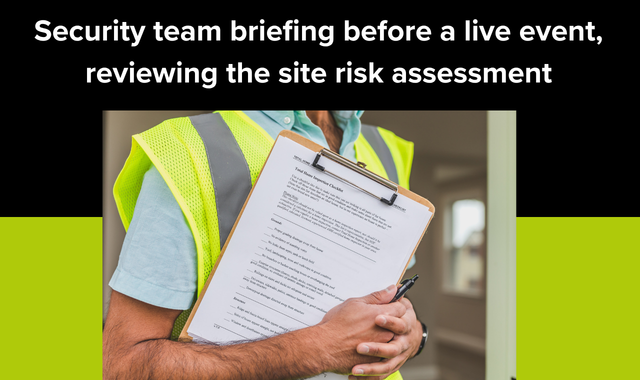
At its simplest, a risk assessment works through a series of practical questions: what could go wrong, who could be affected, how likely is it to happen, and what measures can reduce that risk. The assessment should be specific to the event in front of you, since a plan built for a two hundred person corporate function cannot simply be copied across to a five thousand person festival, because the venue, audience, timings, alcohol, weather and access arrangements all change the risks that need considering. Done properly, the assessment becomes a working document that shapes decisions rather than paperwork that gets filed away.
Why Every Event Needs One
When people hear the word security, their thoughts often turn straight to theft, aggressive behaviour or unauthorised access, and while those risks may need consideration, event security extends much further. A venue with one narrow entrance and most guests arriving within the same thirty minute window is a crowd management consideration in its own right, just as suppliers unloading equipment through the area visitors will use, or a car park with hundreds of vehicles leaving at once after the final performance. None of these situations involves crime, yet all can create genuine risk if they are not considered beforehand, which is why a good assessment looks at how the whole event operates rather than security in isolation.
Crowd Movement, Weather and Vehicle Access
Crowds rarely stay evenly distributed across an event site. They gather around entrances, stages, bars, toilets and exits, and the busiest locations can shift throughout the day, so the assessment should consider where those pressure points are likely to occur and what happens as visitor numbers increase. If several hundred people leave an arena immediately after a performance, it is worth working through where they will go, whether that route meets another group entering, and whether queues could end up blocking an emergency exit. Professional security staff can monitor these areas once the event is underway, but the strongest crowd management is decided long before anybody arrives.
For outdoor events in the UK, weather deserves the same attention, since it can change visitor behaviour surprisingly quickly. A hot day increases demand for water and shaded areas, a sudden downpour can send hundreds of people towards the nearest covered space at once, and strong winds may affect temporary signage or marquees. Rather than simply noting “bad weather” on the assessment, it is worth thinking through where people will go when conditions change and how staff will communicate instructions.
Vehicle access should be considered before the public even arrives. Caterers, production crews and other contractors may need access to the site, and if delivery vehicles are moving through areas where visitors are walking, a clear system needs to be in place for managing that interaction. The same applies to public parking, where it is worth considering how cars enter and leave and whether emergency access could become blocked, and security staff positioned at gates need a clear plan to work from rather than instructions improvised on the day.
Emergency Access, Vulnerable Visitors and Temporary Structures
Writing an emergency procedure is one thing, and making sure it works on a busy event day is another. It is worth asking honestly whether an ambulance or fire appliance could actually reach the necessary area once the site is full, whether access gates are kept clear, and whether staff know who can authorise an evacuation and where visitors should be directed. Security planning should also account for the different people attending, since children, older visitors, people with disabilities and anyone requiring additional assistance may have different needs during an emergency or periods of heavy crowd movement, which is where security and guest experience increasingly overlap. Staff need to know where accessible routes, welfare areas and first aid points are located, along with the procedure for a lost child or a vulnerable adult.
Marquees, barriers, stages, pop-up bars and temporary toilets can completely change how people move around a site, and something that looks sensible on a floor plan may create a bottleneck once visitors arrive. Structures can affect sightlines, emergency routes and a security team’s ability to monitor an area, which is why the assessment should be reviewed once the final layout is confirmed. One of the most useful sources of information for the next event is the previous one, and incident reports, queue problems, parking difficulties and staff feedback should all feed directly into the next assessment, so an event that takes place every year becomes easier to plan safely over time.
The Assessment Should Lead to Action
The real value of an event security risk assessment is not the document itself but what is done with the information inside it. If a busy entrance has been identified, decide how it will be staffed. Where an emergency access could become blocked, change the parking plan. If bad weather could create overcrowding under one marquee, decide where visitors can be redirected, and make sure security staff are properly briefed on those risks and the wider event plan.
The better question is not whether a risk assessment has been completed, but whether it has changed anything about how the event is run. If it has identified genuine risks and helped put practical measures in place, it is doing its job. If it is simply sitting in a folder waiting to be requested, it probably needs another look.
Related Posts